When we watched "Heat Of the Night" in class the first thing that I thought about was the fact that while we look back and know that separate but equal was a load of crap; seeing it through the eyes of Virgil Tibbs just made it all the more transparent. For example one of the first reasons we know that this was a lie is because when Tibbs tells the other officers that he is a cop at first none of them trust him until the chief calls the head chief in Philadelphia.
Tibbs knows that the only way that he can make the social system that he is dealing with come to end is to not only show them he is smarter than them but do it in a way that has no margin for error. He does this by not only calling out the doctor for a faulty time of death assessment but also by in the movie seeming to always be three if not four steps ahead of everything that the other officers tried to prove was the culprit for the murder. Another way that he tried to ruin the social system is that over time he and the chief officer, Gillespie, by the end of the movie had a not amazing but a very respectful and understanding relationship. On one hand Gillespie still had his ego and pride but he also understood that without Tibbs there was no way that they could've solved the case. As the mayor pointed out the old chief would've just shot Tibbs when he went against an order but Gillespie just got angry at Tibbs.
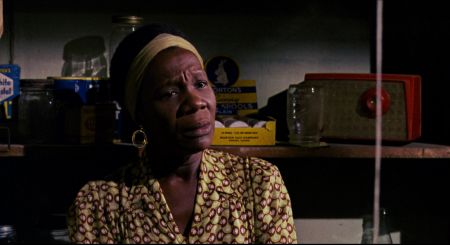 |
| Mamma Caleba |
When we view the position of the women in this movie, I think that instead of treating them as separate but equal we can more view them as the ones in power didn't want to give up the power but the ones without power tried their best to gain power. Lets for example say Mamma Caleba, since she managed to open a semi successful store as a black women in Philadelphia; A thing that most women in general couldn't do, she really didn't want to give it up when Tibbs threatened to report her if she didn't help him. Delores Purdy on the other hand tried to reach for power in anyway that she could, even if that meant having a kid at 16 years old.
Wrapping up my views on the movie, "Heat of the Night," is both complicated but also easily plausible. I think that instead of saying I felt negative I more felt bad for the fact that Tibbs was not only racially profiled but also his clear expertise was ignored for what felt like 90% of the movie. On the other hand I feel joy that the chief, Gillespie, grew and started to respect the work Tibbs did showing that while during that time things were definitely going bad, it was going in the right direction slowly. All in all; I think that the movie, when we finally watched it after 3 attempts, was well made and really did show what it was like living as a black man in the 1960's.


