Thursday, October 30, 2025

Video Reaction Post

Booker T Washington 
After watching the AI videos today in class that where played I learned a lot. Firstly we watched a video about Booker T. Washington. He was a worker in the coal mines as a young kid, at 16 he traveled over 200 miles to find a new job as a janitor to also pay for his college tuition. At 25 he had made a place for African American's to gain practical skills, like farming, trades, and learning the importance of hard work. in 1895 he gave a speech in Atlanta and was talking about how people should learn so that they could gain respect. He was an advisor for president Roosevelt and Taft; and was the first black person in the white house to have dinner.  

For the second video, we learned about the assassination of Abraham Lincoln, when he was planning to give African Americans, mainly the ones who fought in the war the right to vote; Booths realized that instead of just kidnapping the president he would kill him. Lincolns death was not only a tragic event; but it was life changing for the reconstruction era; Johnson who took over after Lincolns death completely didn't follow the ideology that Lincoln had and easily forgave the south and did nothing for African Americans. Eventually Congress took over reconstruction because they realized that Johnson was doing a horrible job, and he eventually got impeached. This had an everlasting effect on the struggle that African Americans faced and prolonged their complete freedom and rights. 

The third video was about sharecropping, basically slavery under another name. This was a labor style that didn't just hurt black people, though it mainly targeted them, it also hurt poor white people. When they farmed they had to give a large percentage of their crops to the land owner and they also had to rent the tools they needed from them at a ridiculous 60% interest rate; leaving the people who delt with this broke and basically a slave. Some would think that this would only last a few years, however share cropping lasted all the way until the 2000s in some areas. The end of slavery didn't mean the end of racial oppression.   

The fourth video was about black political participation, in 1865 for the first time ever America had black people in positions of power and also had a huge voter turnout from black people. While these times were great sadly, after the reconstruction era with the introduction of Jim Crow laws these times ended for a while until black people eventually fought again for their rights. 

The fifth and final video was about the great migration, over the spam of a little less than 50 years over 5 million people migrated from the south to the north and western areas. The main reason for moving was because they firstly offered more money in the north after world war 1; but also because they weren't treated anywhere as bad in the south and north compared to the south. While they didn't have the best treatment it was still leaps and bounds better, and while it did take a while they would preserver for their rights. 

Reaction Post

Why Separate Train Cars were a Bad Idea 

Let’s break this down. Homer Plessey who was a citizen, taxpayer, and working guy gets kicked out of a train car because of his race. He looks white; He acts like any other passenger. But Louisiana says nope, separate cars and why, because he was 1/8th African American. 

The 14th Amendment says citizens are protected by both the U.S. and their state. So why is Louisiana ignoring that? Louisiana’s culture is mixed. African Americans and French families have been intermarrying for generations. Diversity is baked in however this law doesn’t reflect that it tries to erase it and push the will of white supremacy. 

Also, how is this supposed to work? Are train workers supposed to inspect every passenger’s racial background?  Are they supposed to do a blood test for every single passenger that tries to board the train? That's not only ridiculous but costly and time consuming.

From a religious angle, it’s offensive. Genesis says we’re all God’s children. Segregation goes against Christian teachings. It’s spiritual hypocrisy. Economically? A nightmare. Railroads have to double everything cars, staff, costs. It’s wasteful at best, even the companies didn’t want it. Northern states skipped this nonsense and thrived but, Louisiana’s law did this not only hurting the railroads but also scares off investors that didn't want to have this imagine on their background.

And think of the damage to kids? Huge and life changing; It teaches Black children they’re inferior and that even if a law bans something people will find loopholes, this could cause a bigger distrust in the government.  

Justice Harlan nailed it: “Our Constitution is color-blind.” If segregation starts with trains, where does it stop? That's the question, where would it stop? Would we basically just bring back slavery if nothing was done to stop this? 

Now, the state says it’s about peace and order. They claim the law is neutral, that it applies to both races. But let’s be real; It’s rooted in the legacy of slavery. These laws are part of a system that keep black people from owning land and gaining independence. It’s control, dressed up as policy. The state says it’s protecting white workers and avoiding racial tension. But that’s just fear talking. Bottom line; This law isn’t about safety, it's about giving white people more power all over again.


Ai disclosure, I used Co-pilot to use my notes to make a blog post; however I edited so that it better reflected my ideas and the things that I wanted to say in the blog post. I made sure that I also used a format that would make it in a college freshman style. 

Tuesday, October 21, 2025

Anti Miscegenation Laws

When people think about racism in American history, we often think about segregation, slavery, or the civil rights movement. But one of the most invasive forms of racism has to be the Anti Miscegenation Laws; laws that literally made it illegal for people of different races to get married. 

These laws have a ugly and long history, going all the way to 1967, a whopping 102 years after slavery was officially abolished. It was first passed in Maryland in 1661 and followed soon after in Virginia in 1691. These laws didn't only just ban interatrial marriages but also punished it very harshly. White people who married black or indigenous people were banished from the colony. Over time, 40 states adopted similar laws; Targeting and trying to end the idea of interatrial marriage or feelings, especially for black people. 

Richard and Mildred Loving
But over time people resisted, one of the most well known and famous challenges to this law was from Mildred and Richard Loving. They were in an interracial relationship that lived in Virginia and were arrested in 1958. Their case, Loving v. Virginia, went all the way to the Supreme Court. In 1967, the court ruled that anti-miscegenation laws were unconstitutional, violating the 14th amendment's guarantees of equal protection and due process. This decision struck down all remaining bans on interatrial marriage across the country. 

Still, the legacy of these laws didn’t disappear overnight. Some states, like Alabama, kept the laws on the books until as late as 2000 even though they couldn’t be enforced anymore. And the social stigma around interracial relationships didn’t vanish with the stroke of a judge’s pen. Many couples continued to face discrimination, judgment, and even violence.

Today, Loving v. Virginia is often cited in other civil rights cases, including those involving same-sex marriage. It stands as a powerful example of how the law can both oppress and liberate and how love can be a radical act of resistance.

This is a showing that during the reconstruction era peoples minds, mainly pissed off white people, wouldn't change overnight. They made sure that while not blatantly having slavery they instead did as much as they could to limit progression towards equality. They were in all regards doing legal racism, even after the abolishment of slavery. 


Ai disclosure: This blog post was created using Co-pilot, but was mainly written by me. I used the prompt that I was a college freshman and that the post had to be 500 words. 

Monday, October 13, 2025

Gone With the Wind Reconsidered

I watched Gone with the Wind for the first time, and honestly, I’m still turning it over in my head. I knew it was going to be long and boring, but I didn’t expect it to be so emotionally layered or so morally complicated.
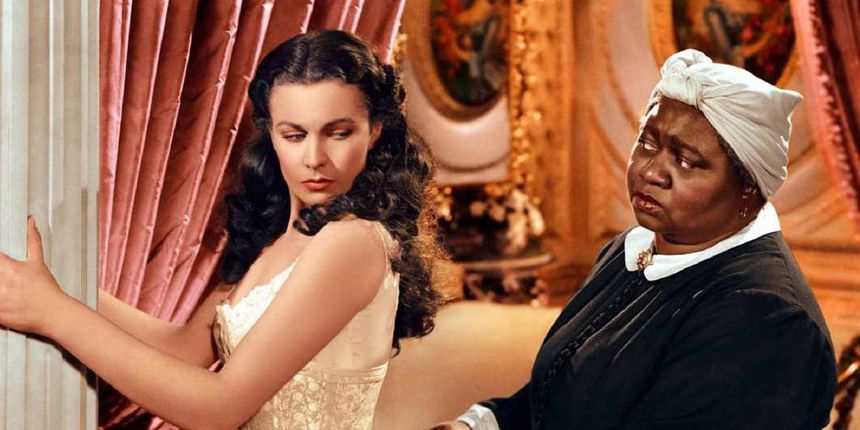
Mammy - Hattie McDaniel
Let’s start with Mammy. Hattie McDaniel’s performance completely caught me off guard. I thought she’d be a background character, but she’s actually the one holding the whole household together. She’s sharp, commanding, and constantly calling people out especially Scarlett. That line, “You ain't got the sense that God gave a squirrel!” is hilarious, but also kind of powerful. She’s a Black woman,
enslaved, openly scolding a white woman in the middle of the Old South. That’s not nothing it took gut and real power.

What really struck me is how Mammy seems to understand everyone better than they understand themselves. She’s not just reacting to the chaos, she’s commenting on it; Like she sees the bigger picture. And while the film doesn’t give her the full complexity she deserves, McDaniel brings so much depth to the role that you can’t help but feel like she’s the emotional center of the story.

That said the movie definitely romanticizes the South in a way that’s hard to ignore. It paints this picture of elegance and honor, but completely glosses over the brutality of slavery. The enslaved characters are shown as loyal and content, which is obviously not the reality. It’s unsettling; Like the film wants to tell a story about survival and love, but only from one side. 

Scarlett
Scarlett, though she’s a whole different case. At first, I couldn’t stand her and to be honest I still really can't. She’s selfish, manipulative, and obsessed with appearances. But as the war drags on and everything falls apart, she transforms. She becomes this fierce, relentless survivor. Not exactly likable, but definitely fascinating. It made me think about how war forces people; Especially women to adapt, to take control. 
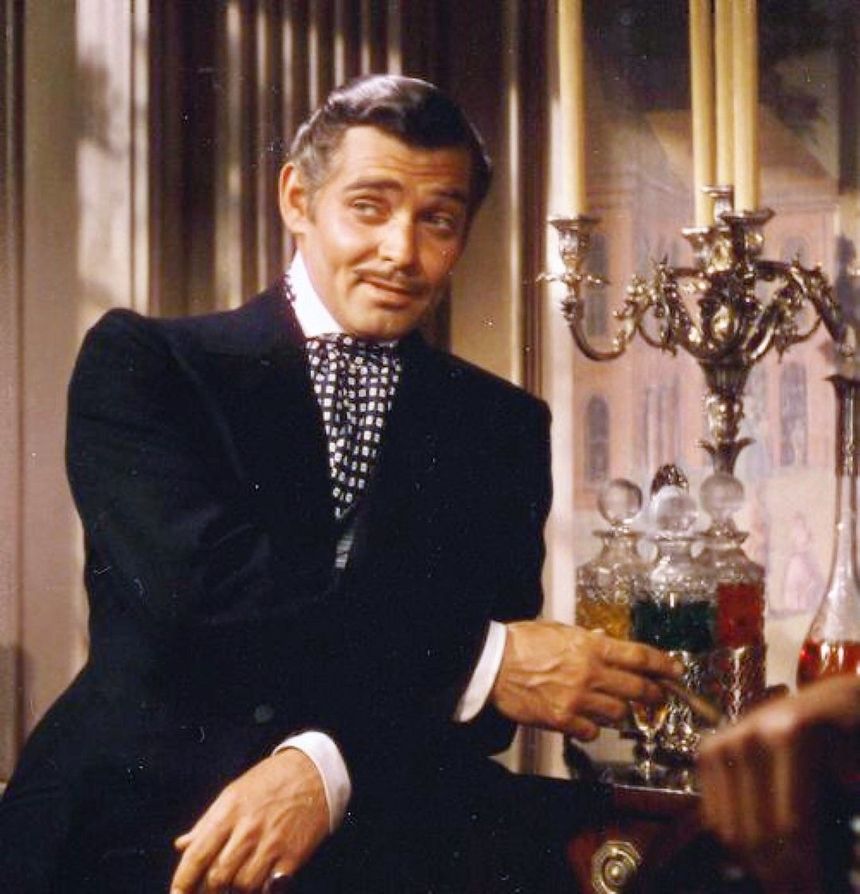

Rhett Butler
And then there’s Rhett Butler. He’s charming, sure, but also ruthless. He profits off the war, doesn’t pretend to be noble, and somehow still manages to be the most honest person in the room. It’s uncomfortable, but also real. There are always people who find ways to benefit from disaster then and now.


Watching Gone with the Wind in 2025 is a weird experience. It’s a beautifully made film with unforgettable performances, but it’s also stuck in a version of history that feels selective and sanitized. Still, I’m glad I watched it, even if it still was boring and long.

Final Presentation Script

Hello, my name is Lucas Gustason. Ben and I will be doing our final presentation specifically on the topics of the EOTO’s, Blogs, and the us...