Tuesday, September 30, 2025

Walt Whitman's views on slavery

Walt Whitman's complex view's on slavery: A Free Soil Perspective


Walt Whitman

Walt Whitman
remains one of America's most known and respected poets, but his political views on slavery often give modern readers a shock. White he found slavery as a ideology morally disgusting, he wasn't the hero that some assume him as. Instead, he had a middle ground approach, that being the Free Soil movement

The Free Soil Party, which Whitman supported and spoke about, had a clear and precise motto: "Free Soil, Free Speech, Free Labor, and Free Men." This wasn't about immediate abolishing of slavery; it was a stance that wanted to prevent slavery's growth into western territories as America pushes its boundaries farther outward.    

Whitman's reasoning for this centered fully on the economical dignity and competition of white labor. He fought that free white workers just couldn't compete fairly against slave labor. When plantation owners brought enslaved people west, they undercut and took away opportunities that should have been occupied by independent framers and laborers trying to build new lives on the frontier. 

This position gave a huge difference from radical abolitionists and Free-Soilers. Whitman viewed abolitionists are extremists whose demands threated to tear the union apart, which he wasn't wrong about. He believed that their all-or-nothing approach would cause a huge conflict rather than gradual progress. He much preferred the choice of containment of slavery. 

The Wilmot Proviso of 1846 illustrated Whitman's vision. This proposed legislation would have banned slavery in all territories acquired form the Mexican-American War. Whitman supported this legislation enthusiastically, viewing it as a perfect compromise for protecting free labor and maintaining the bonds holding the nation.

Yet his views weren't purely pragmatic. While he repeatedly said that slavery was morally wrong and abhorrent. He contradicted however himself a lot because he didn't support abolition. He cared more about the Union's preservation than actually ending slavery.

This caused him to earn criticism from both sides, Abolitionists saw him as a person who couldn't really want to end slavery, instead wanting to just let slavery play out and hopefully end. Pro-slavery advocates viewed the restriction as an attack on their way of life; however even with both sides giving him criticism Whitman stood his ground in his belief of the Free Soil Approach.

Understanding his actual stance and why he thought the way he did really just shows us how messed up pre-Civil war politics was. It revealed the complexity that people had to deal with when even talking about something this life changing for the Union.

Whitman's Free Soil politics reminds us that historical figures rarely if ever fit the modern categories that we have today; and that while he did definitely want the end of slavery calling him an Abolitionist would be a far cry of what he actually was. 


Ai discloser; I used Claude AI to help me create this blog post; However every word was typed by me. I used the text that Claude gave me as a rough outline for the format of how I worded my post. Claude did give me the links for the post. 

Thursday, September 25, 2025

Video Reaction Post

During class today we watched videos presentations done by our fellow classmates about the topics that also correlated to our debate. In the presentations, they mainly talked about slavery not only in America but also in the United Kingdom. 

John Calhoun
The first video that we watched talked about a guy named John Calhoun; he was a man who was very much pro slavery, the thing that he said that holds the most animosity in today's light is the quote he said which was, "Slavery was a positive good." while most people in that time weren't exactly disagreeing with the words that he said they didn't explicitly say that it was good, more that it was a necessity that had been the norm for many years. 

The Antebellum slave was another topic that a video was presented on, this was telling us that many families faced devastating issues even greater than being a slave; while being a slave was already as bad as it could get, the people who auctioned for the slaves sometimes either didn't want the whole family or just broke them up because they couldn't afford that many slaves. At that time slaves were around $180,000; so just being one slave was a crazy ask buying a whole family would be not only expensive but sometimes just not an economically sound decision. 

In the next video he talked about how while some slaves tried and successfully ran away from their masters it was dangerous for many reasons; the biggest one however was the bounty hunters, their whole job was exactly as it sounds they hunted runaway slaves for the reward that they'd be given when they caught them. So not only were slaves dealing with crazy hard conditions in the wilderness, they also had to deal with hunters. These videos showed us the hidden truths that aren't always talked about when we think about the problems with slavery that we had at a time. 


Tuesday, September 16, 2025

State v. Mann

State v. Mann: A Glimpse into the Legal Machinery of Slavery

Few cases in American legal history expose the brutal logic of slavery as bluntly as State v. Mann (1829). Decided by the North Carolina Supreme Court, the ruling didn’t merely uphold slavery; it codified its violence, revealing the state’s deep political investment in preserving human bondage.

Chief Justice Thomas Ruffin
The case involved John Mann, who had rented an enslaved woman named Lydia. When Lydia tried to escape punishment, Mann shot and wounded her. A lower court convicted him of battery, but the North Carolina Supreme Court overturned the conviction. Chief Justice Thomas Ruffin
ruled that slaveowners and anyone acting on their behalf held absolute authority over enslaved individuals. “The power of the master must be absolute,” Ruffin wrote, “to render the submission of the slave perfect.”

This was more than a legal technicality. It was a political declaration. North Carolina, like much of the antebellum South, was built on slavery’s economic and social foundation. The ruling reflected the state’s commitment to maintaining that foundation, even at the cost of justice and humanity. Ruffin acknowledged the moral discomfort of the decision, describing a “struggle… between the feelings of the man and the duty of the magistrate.” Yet he insisted that judges were bound to enforce the law as written—not reshape it according to conscience.

In doing so, Ruffin drew a sharp line between morality and legality. The court’s stance was clear: the rights of slaveowners as property holders outweighed any notion of personal rights for the enslaved. Slaves were not people in the eyes of the law they were property, and the law would protect that property with ruthless consistency.

The political implications were profound. By reinforcing the legal status of slaves as property, the court legitimized the power of slaveholders and discouraged judicial challenges to slavery. It sent a message to reformers and abolitionists: the courts would not be the avenue for change. If slavery were to be dismantled, it would have to be through legislation or revolution not through the judiciary.

The legacy of State v. Mann has echoed through history.

Harriet Beecher Stowe

Harriet Beecher Stowe referenced the case in her novel Dred, using it to highlight the moral bankruptcy of slavery’s legal defense. Today, the case stands as a chilling reminder of how law can be used to uphold injustice when political power demands it.

Ultimately, State v. Mann wasn’t just a ruling; It was a reflection of a state’s political view. North Carolina’s judiciary chose to protect slavery, even when it meant denying the humanity of those it oppressed. And in doing so, it left behind a legal precedent that continues to provoke reflection and reckoning.


AI Disclose: I used Microsoft copilot to draft me a blog post idea using the notes I got from Wikipedia  and from the notes we took in class. I then edited the draft that copilot gave me to more match the ideology that I wanted for this blog post and for the mock trial notes I'd be using.

Thursday, September 11, 2025

Eight Values of Free Expression

When you think of the eight values of free expression what do you think about? I personally think about two things; Check on Governmental Power and Marketplace of Ideas.

I think that these two interjoin together in a way that benefits both them together, when we think about a marketplace of ideas also known as discovery of truth we think of a table where you should talk openly to a vast amount of people. I think that this should also shine light on the fact that when we are talking at this "table" we shouldn't just speak about things that we personally like, I think that we should talk about everything and should get all the ideas out on the table; this way we can approve and disprove which idea we agree on. 

A big thing we shouldn't allow whilst doing a market place of idea's is letting the government decide what choices we should make, when that happens it's called a market failure. For example right now, places in the European Union are having a market failure because the government is not letting all the ideas be placed on the table instead they're only letting what they want be spoken about. In Britain  right now they just recently added a law called the digital service act, summarized nicely it's basically a law that takes away free speech. Daily they're putting around 30 people to jail for either criticizing or saying things that the government doesn't agree with. 

The other place that's going through a market failure is the Denmark, right now they've imposed a new law called,  Chat control hinges, which basically gives them permission to decide whether or not the message you're trying to send should be sent or not. Not only is this blatant censorship but it's also a privacy breach. As clarified by Cyber Insider,  “All known algorithms are fundamentally susceptible to evasion.” In my opinion this has and will cause major backlash from the people who live in these areas. 

A market place of ideas in a good light is people who do open debates is Ben Shapiro.
He, like Charlie Kirk, gave people a platform that they can stand up in front of both a crowd of people and a crowd at home watching and speak what they believe in or wish to debate about. He is showing the people that no idea, even if in his eyes is fundamentally wrong or if it's very controversial  He is openly and showing proof that he wants to make sure that everyone gets to use their freedom of speech on his debate and he doesn't silence them. This is helping expand the view points of people who might not believe in what he says because a open debate is always better than just a person speaking without letting the other side speak their views.

How Marketplace of Ideas and Checks on Governmental power tie together in my mind is that while people are having debates it's reinforcing the pillars that not everything is just a one sided screaming contest; When you sit down and talk things out in a professional style it makes it a more compelling argument and makes your points more valid. It also empowers people who feel like something is either wrong or out of place to have a platform in which they can talk about it and bring public recognition to it. I think that checks on governmental powers is a key way that helps a marketplace of ideas come and show the truth even easier after all, the best way to get public knowledge on something is a live debate.


AI disclosure: I used Microsoft copilot only to help me think of idea's for the prompt and in no way did I use Ai to draft or help me write this blog post. 

Tuesday, September 9, 2025

The Bible and Slavery

Slavery is a recurring theme throughout the Bible, reflecting its prevalence in ancient societies. From patriarchs owning slaves to laws regulating servitude, the biblical texts offer a nuanced and often debated of slavery. But understanding these references requires careful attention to historical context, linguistic interpretation, and theological nuance. 


Old Testament
The Old Testament acknowledges slavery as a social institution, particularly in Leviticus 25:44–46, which permits Israelites to own slaves from surrounding nations and even pass them down as property. However, this wasn’t a blanket endorsement. Hebrew slaves had protections: they could be freed after six years (Exodus 21:2), were shielded from abuse (Exodus 21:26–27), and kidnapping for slavery was a capital offense (Exodus 21:16). Debt-based servitude was common among Israelites, often voluntary and temporary (Leviticus 25:39–43). Manumission laws, such as the Jubilee year (Leviticus 25:10), emphasized restoration and freedom. Yet, foreign slaves had fewer rights, and female slaves could be taken as concubines (Exodus 21:7–11), highlighting the patriarchal and hierarchical nature of ancient society. 


What does the word “slave” really mean? Kyle Davison Bair argues that the term “slave” in biblical Hebrew doesn’t always carry the modern connotation of involuntary servitude. It could also mean “servant,” “minister,” or “official.” This linguistic fluidity suggests that not all biblical references to slavery imply ownership or dehumanization. Context matters deeply when interpreting these texts. 


Piece of The New Testament
The New Testament continues
the conversation but shifts the tone.
Ephesians 6:5 instructs bondservants to obey their masters “as you would Christ,” while Colossians 4:1 commands masters to treat slaves justly. Paul’s letter to Philemon is particularly striking—he appeals for the runaway slave Onesimus to be received “no longer as a slave, but better than a slave, as a dear brother” (Philemon 1:16). Galatians 3:28 proclaims spiritual equality: “There is neither slave nor free… for you are all one in Christ Jesus.” Paul also condemns slave trading in 1 Timothy 1:10, listing “manstealers” among the lawless. 


Slavery in biblical times was not racially based and did not resemble the slavery of African Americans in the New World. It was often economic, tied to debt, war, or poverty. The Bible’s regulations were not moral endorsements but societal frameworks within entrenched systems. As Britannica notes, slavery was a typical feature of civilization, predating written records and appearing in most societies throughout history. The Bible reflects this reality, offering both regulation and, at times, resistance—such as Deuteronomy 23:15, which forbids returning escaped slaves to their masters. 


In conclusion, the Bible’s treatment of slavery is complex and layered. It neither fully endorses nor outright abolishes the institution but offers glimpses of justice, protection, and spiritual equality. Understanding these texts requires historical literacy, theological sensitivity, and a commitment to context over assumption.


AI disclosure: After using Britannica and openbible to research topics about slavery in the bible I then used Microsoft Copilot to condense the notes Gianna, Benjamin, and I took during class. We used Copilot to both condense and summarize the notes we wrote as a group into a blog post instead of notes. We then edited the prompt that it gave us both by removing things that didn't make sense or fit the theme and also by adding more text and images to better show our understanding.

Thursday, September 4, 2025

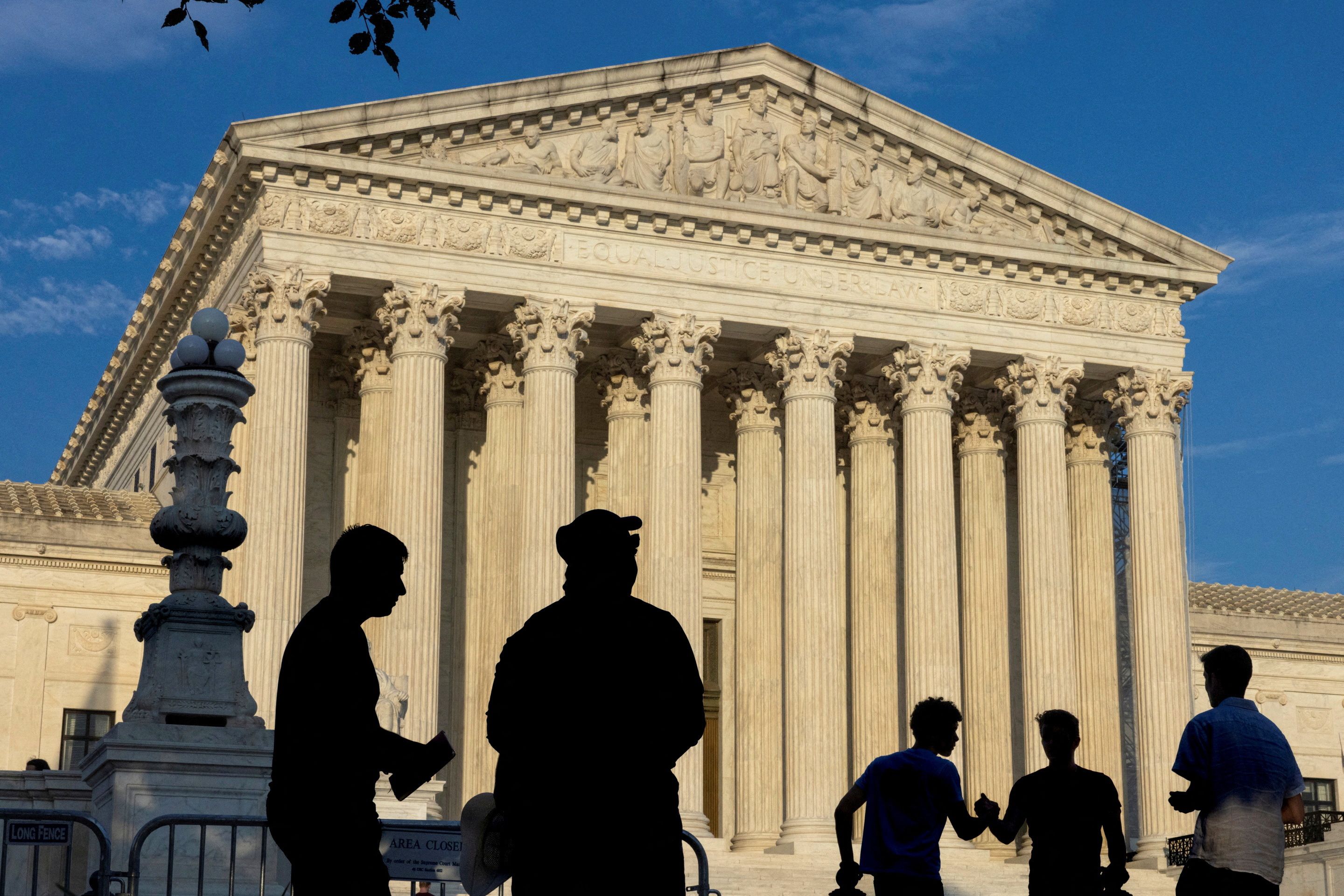
Supreme Court Reflection

My Perspective on the U.S. Supreme Court: Power, Process, and Principle

U.S. Supreme Court
As someone deeply interested in how our government functions, I’ve come to appreciate the unique role of the U.S. Supreme Court. It’s not just the highest court in the land—it’s a cornerstone of our democracy, where nine justices interpret the Constitution and shape the laws that affect all of us in our day to day life.

Each year, the Court receives around 7,000 petitions, but only a select few are heard. I’ve learned that justices meet to decide which cases are worth reviewing, focusing on those with significant legal or constitutional implications. Once a case is accepted, both sides get 30 minutes to present their arguments. During this time, justices ask tough, questions that challenge lawyers to defend their reasoning from multiple angles.

Dred Scott
What fascinates me most is what happens after the arguments. The justices deliberate in private, and one of them from the majority writes the opinion. This document isn’t just a summary; it sets legal precedent and can influence future rulings for decades. Drafting takes about four weeks, but revisions and compromises can stretch over months. Final decisions are typically announced by late June, at the end of the Court’s term.

The Court’s history is complex whilst only being a bit older than 200 years old. Figures like Chief Justice John Marshall helped establish its authority and public trust, but cases like Dred Scott v. Sandford remind me that even the highest court can make deeply flawed decisions. 

I believe the Supreme Court’s power lies in public trust. People obey its rulings not because they’re forced to, but because they believe in its legitimacy. That trust is essential. Without it, our legal system—and perhaps our democracy—would be at risk.

While watching the video I realized, the Court represents something bigger than politics. It’s about principles, integrity, and a long-term vision for justice in America. 


AI disclosure: After taking notes whilst watching the Supreme Court video in class, I used Microsoft Copilot to smooth the text and format it in a way that was precise and formatted in a readable way. I edited the text and expanded on the AI generated text by adding my personal thoughts and also my personal words.


Final Presentation Script

Hello, my name is Lucas Gustason. Ben and I will be doing our final presentation specifically on the topics of the EOTO’s, Blogs, and the us...